Offices and workplaces
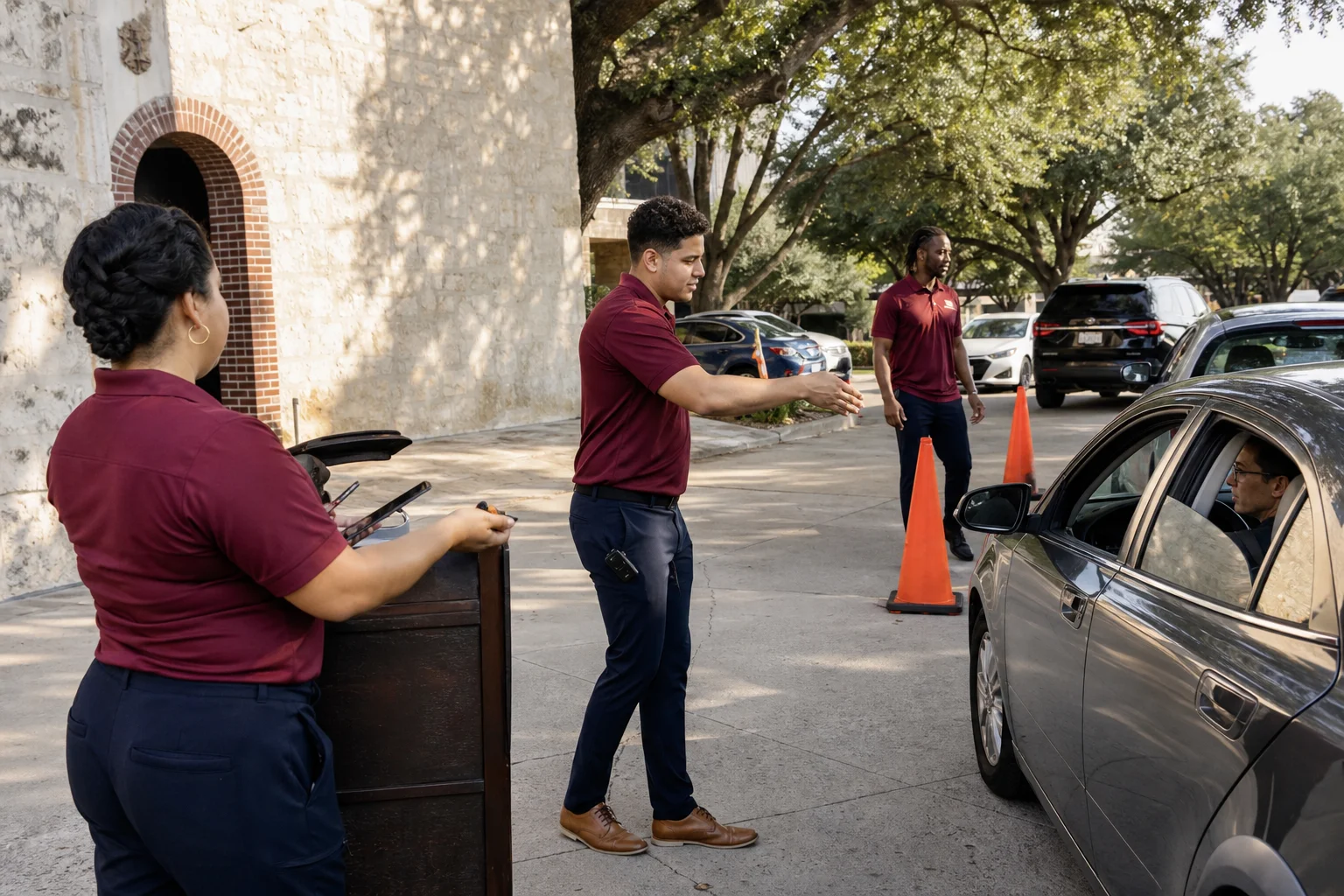
Corporate valet parking in Austin.
Corporate valet can create usable capacity and a clearer arrival when a workplace has more vehicles than convenient spaces. The plan should respect security, employee schedules, visitor access, and the property's daily traffic rules.
Common uses
Where corporate valet parking is used.
- Office campuses
- Executive and board events
- Employee parking peaks
- Visitor arrival programs
- Temporary lot constraints
What gets planned
Details to confirm before service.
The operating details belong in the plan, not in a last-minute text thread.
Parking demand
Arrival times, shift changes, visitor patterns, available spaces, and walking distances show where valet support can help and where it cannot.
Property requirements
The operating plan should align with facilities, security, accessible routes, emergency access, and any existing parking controls.
Daily operating process
Check-in, key handling, vehicle staging, employee communication, and the afternoon retrieval pattern are documented before service begins.
Estimate inputs
Workplace valet program requirements.
Corporate valet may solve a short event peak, a temporary loss of spaces, or a recurring capacity problem. Each use case needs a different operating window and communication plan. A practical estimate begins with the employee and visitor schedule, then tests what the lot can support without compromising property access or security procedures.
Employee arrival and shift patterns
A single headquarters arrival, staggered teams, and shift changes produce different demand. Badge schedules, visitor appointments, return-to-office days, and known meeting peaks help locate the periods that actually need valet coverage.
Lot geometry and stacking rules
Additional capacity depends on aisle width, circulation, usable staging space, and which vehicles may be blocked. The site plan should protect accessible spaces, fire lanes, loading, reserved stalls, and a workable retrieval route.
Security and key custody
Employee communication, visitor check-in, restricted areas, key storage, and end-of-day exceptions should align with facilities and security policy. The valet process should not create an informal path around existing access controls.
Temporary or recurring coverage
Construction and company events may need a defined start and finish. A recurring program needs operating days, escalation contacts, absence procedures, and a method for adjusting staffing when on-site demand changes.
Austin planning note
Greater Austin workplaces range from downtown towers to suburban campuses. The right valet model depends on the physical lot and employee schedule, not just the number of people assigned to the site.
Can corporate valet add parking capacity?
It can help a property use suitable space more efficiently, especially when an operating plan allows controlled stacking. The actual gain depends on the lot geometry and access requirements.
Can service be temporary?
Yes. Construction, office events, return-to-office days, and seasonal demand can call for a defined operating period instead of a permanent program.
What should facilities teams provide?
A site plan, access rules, parking counts, operating hours, security contacts, known peak periods, and any restrictions on stacking or key custody are a strong start.
Keep exploring
Related services.
Traffic direction and lot staffing
Parking lot management
Attendant staffing, traffic direction, space allocation, and arrival planning for busy lots and temporary parking operations.
Private and public events
Event valet parking
Temporary valet service for fundraisers, launches, galas, private parties, and productions with a defined arrival window.
Workplaces quote
Send the address, date, hours, and expected vehicles.
Add any known lot, garage, curb, or property access details.