Traffic direction and lot staffing
Parking lot management in Austin.
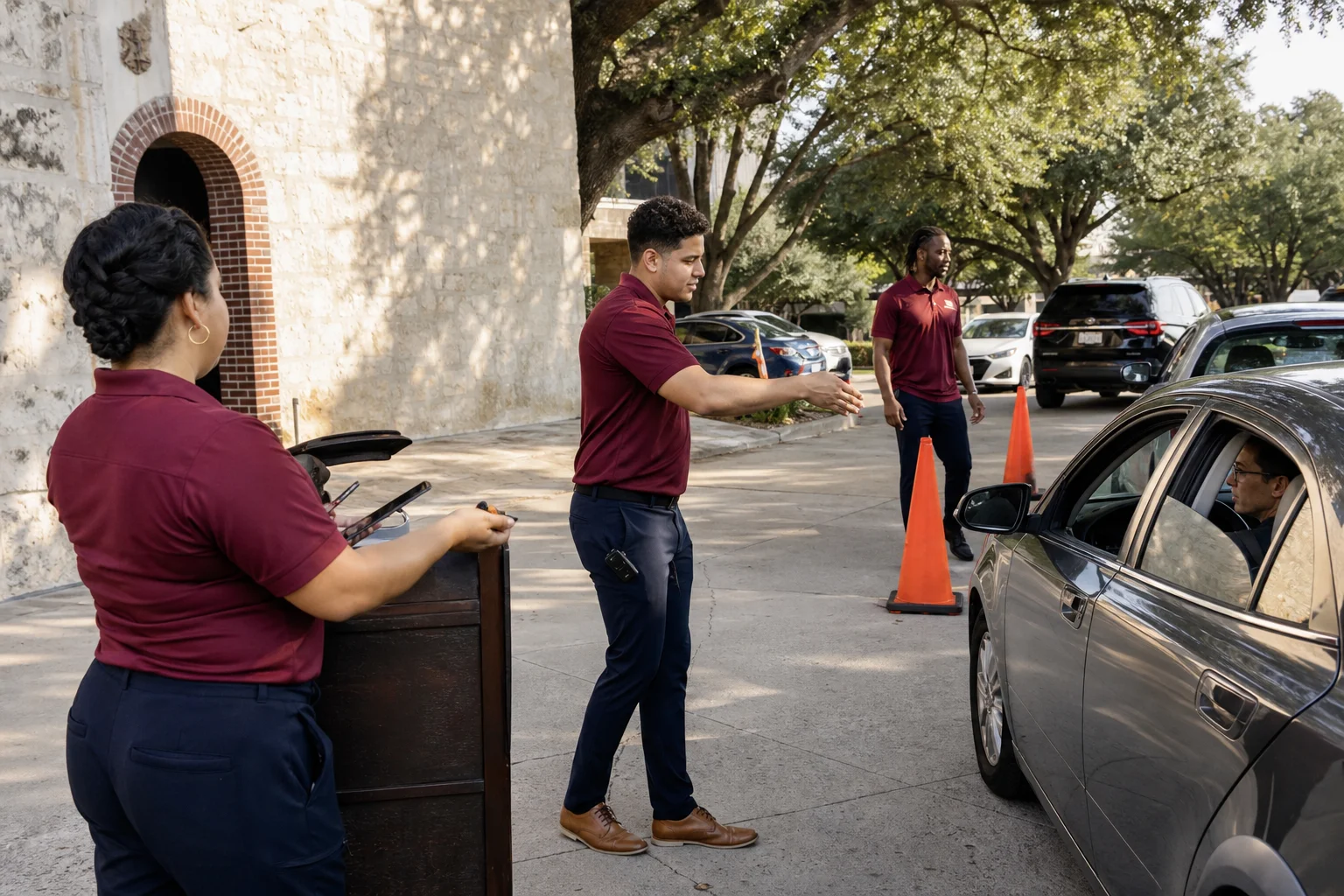
Not every parking problem needs traditional valet. Some sites need attendants who can direct vehicles, protect reserved areas, stage arrivals, monitor capacity, and keep exits clear.
Common uses
Where parking lot management is used.
- Venue and event lots
- Overflow parking
- Corporate gatherings
- Reserved and credentialed areas
- High-volume arrivals
What gets planned
Details to confirm before service.
The operating details belong in the plan, not in a last-minute text thread.
Usable capacity
Striping is only the starting point. Entrances, exits, fire lanes, loading, pedestrian paths, and turnaround space affect true capacity.
Traffic sequence
The plan shows where vehicles enter, pause, receive direction, park, and leave, plus what happens when the preferred area fills.
Signs and attendant positions
Attendant positions, signs, cones, lighting, radios, and escalation contacts help drivers understand the next move before congestion forms.
Estimate inputs
Parking lot operating requirements.
A striped capacity number does not explain how a lot behaves under pressure. Lot management starts by identifying the decisions drivers will face, the spaces that must remain protected, and the point at which the preferred area is full. The estimate should describe attendant positions and traffic equipment in relation to that sequence, including who can authorize a change when field conditions differ from the drawing.
Usable capacity
Fire lanes, accessible spaces, loading zones, turnarounds, pedestrian paths, equipment areas, and blocked stalls reduce the number that can actually be assigned. A field count is more reliable than multiplying rows on an old plan.
Driver decision points
Attendants and signs work best before a driver chooses the wrong aisle or entrance. The plan identifies each decision, the instruction needed there, and how team members communicate when parking assignments change.
Overflow triggers
An overflow area needs more than spare pavement. Its opening threshold, access route, approved capacity, lighting, pedestrian or shuttle connection, attendant coverage, and closing procedure should be understood before the primary lot fills.
A separate exit plan
Arrival circulation may fail when reversed for a concentrated departure. Exit gates, merging traffic, pickup zones, pedestrian crossings, and post-event breakdown should be reviewed as their own phase of the operation.
Austin planning note
Austin lots can be affected by event traffic, shared tenants, uneven surfaces, remote overflow areas, and limited access points. Those site conditions should drive the plan and equipment list.
Is lot management the same as valet?
No. In a lot-management operation, drivers may park their own vehicles while attendants direct traffic, assign areas, monitor capacity, or protect reserved spaces.
Can you manage an overflow lot?
An overflow plan can cover access, attendant positions, pedestrian or shuttle movement, lighting, capacity limits, and the trigger for opening or closing the area.
What does a site review cover?
Useful inputs include the lot layout, surface, entrances, traffic direction, pedestrian paths, accessible spaces, emergency access, lighting, and the expected arrival schedule.
Keep exploring
Related services.
Offices and workplaces
Corporate valet parking
Parking support for offices, campuses, company events, visitor arrivals, and periods when the lot is under pressure.
Private and public events
Event valet parking
Temporary valet service for fundraisers, launches, galas, private parties, and productions with a defined arrival window.
Lot management quote
Send the address, date, hours, and expected vehicles.
Add any known lot, garage, curb, or property access details.